
Any-Kinda-Compote
A quick little recipe for summer's bounty.

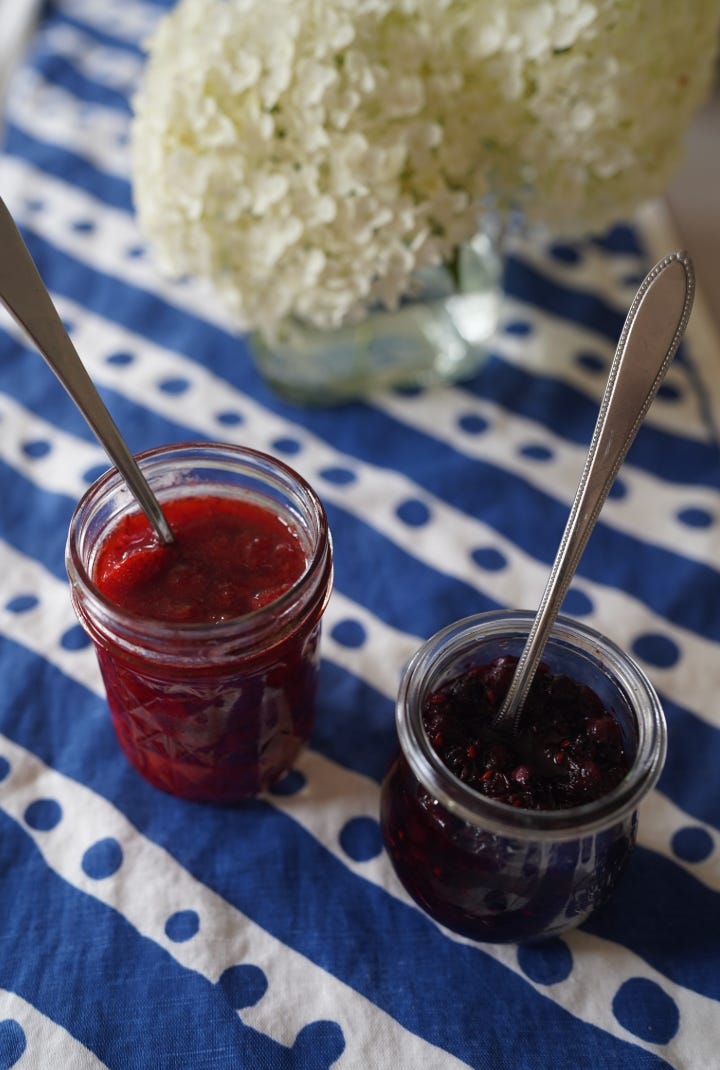
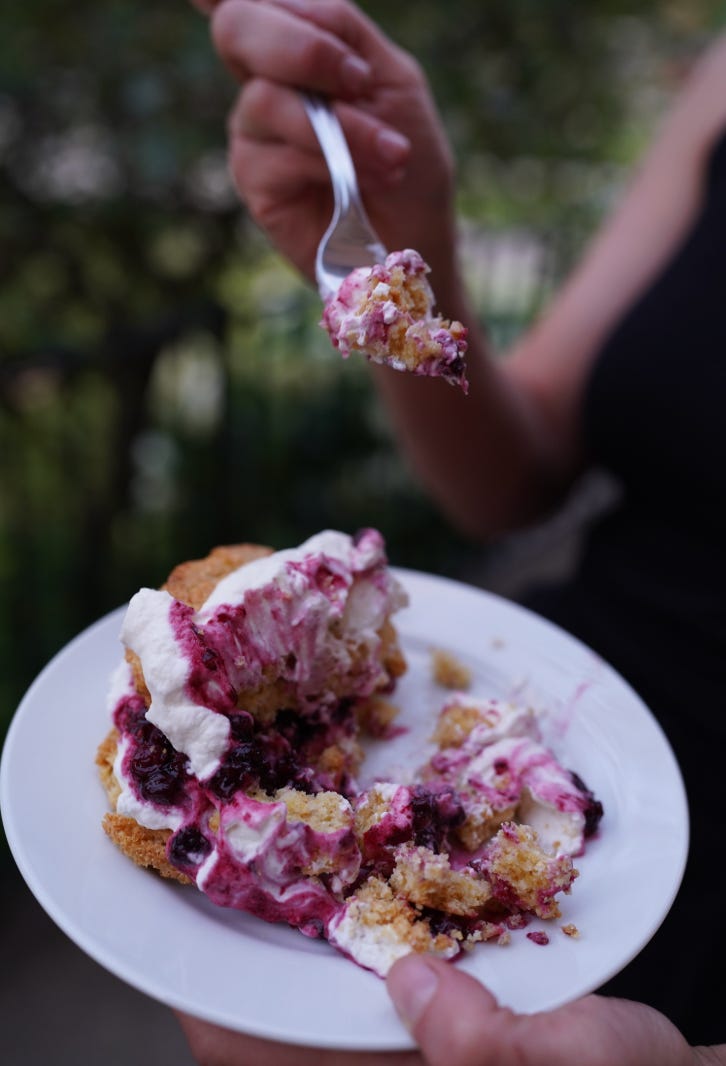
Happy Sunday! I’m in the midst of testing shortcake recipes. Certainly, one could make a batch of our sweet scones, pat the dough into a square, cut into circles, and bake for a close-enough version of the classic summer treat. But that would be too easy. I’m determined to find the fine line between crumbly and spongy. Our scones, particularly the juicy fruit variety, are much lighter in texture than what comes to mind for decidedly anti-scone people — dry and dense pucks of baked dough. However, if you’re serving that kind of scone with a whole bunch of luscious cream…it works. I could go on. Suffice it to say that the shortcake recipe I’ll share with you (hopefully this week! ) will be just right.
For today, I’m sharing an ever-so-slightly adapted recipe from the Sister Pie cookbook for Any-Kinda-Compote. I was inspired to write this post because my boyfriend Dustin (a carpenter/gardener/painter/dad/etc extraordinaire) has a Saskatoon tree in his front yard and I’ve been harvesting the deeply purple berries every chance I get.

Saskatoons — or serviceberries, or juneberries, or prairieberries — are native to North America and taste a bit like a blueberry crossed with a mulberry, with a hint of almond and rose. You can certainly eat them raw (and wild serviceberry shrubs are a plenty!), but I like their flavor best when punctuated by lemon juice and heat. Compote it is!
Side note: Robin Wall Kimmerer, author of the breathtaking Braiding Sweetgrass, also has a book called The Serviceberry: Abundance and Reciprocity in the Natural World. I’m planning to read it once I’m finished with Ruth Reichl’s iconic Garlic and Sapphires, and this all has me thinking that it’d be fun to start a food-themed/memoir-ish book club. Who’s in?


Although traditional strawberry shortcake is served with macerated* strawberries, you can shortcake with all sorts of berries and making a batch of compote with your berry (or other fruit) haul is a straightforward way to slightly prolong the fruit’s shelf life.
*Macerated fruit has been cut or smooshed and mixed with a bit of sugar to sit at room temperature, drawing the moisture and natural sweetness out of the fruit. It helps to slightly soften the berries without cooking.
Compote is, in its most basic form, fruit mixed with sugar and cooked on the stove until the fruit begins to break down. It’s not as thick as jam, and there’s no need to add starch. It’s perfect for ice cream sundaes, granola and yogurt, pancakes, or even on meat.
Any-Kinda-Compote
Makes roughly 2 cups of compote
The sugar amount in this recipe acts as a minimum, so feel free to add more if your fruit is extra tart. The zest is optional, but if I’m juicing citrus I may as well zest it first.
INGREDIENTS
4 cups fruit, appropriately prepped*
½ cup (96g) granulated sugar (sometimes I use turbinado sugar, instead)
½ teaspoon kosher salt
½ teaspoon citrus zest
1 tablespoon freshly squeezed citrus juice
*Small berries can be kept whole, strawberries hulled and halved, rhubarb and peaches/plums sliced into ½” pieces, etc
Combine all ingredients in a medium heavy-bottomed saucepan. Bring to a gentle boil, stirring often to make sure the fruit doesn’t burn then lower the heat and simmer for 15 - 20 minutes, or until the fruit has almost completely broken down and the mixture has slightly thickened. If your fruit yields extra liquid and you want a more hefty compote, you can continue to cook until some of the water evaporates, or mix in 2 tablespoons of tapioca starch. Remove from heat and allow to cool before transferring to an airtight container.
Compote can be stored in the refrigerator for up to two weeks. Make a batch soon, and you’ll be so ready for the shortcake recipe!

And the book idea sounds great!!
So timely! NPR did an entire story this morning on serviceberries and the goal to get them into more markets so people can taste and get to know them!