
Semiquincentennial Shortcakes
Accidentally patriotic, essentially delicious.

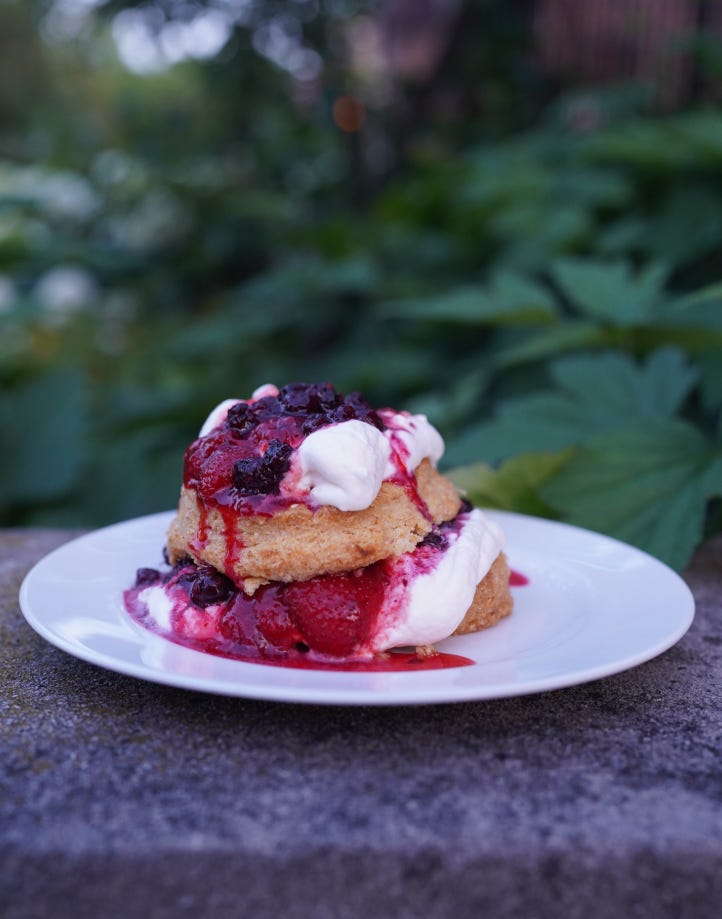
I’ve eaten so many shortcakes this past week, and still I never tire of the ethereal balance between short pastry crumb, decadent cream, and bright, zingy berries. As I cut butter into cornmeal and flour, I reminisced about the strawberry shortcake of my youth, the “cake” part being altogether different than the kind I’ve been making lately. The dessert shells were angel food cake-adjacent — spongy, sweet, and ready to be piled high with fresh strawberries and Cool Whip or Reddi-Wip, whichever was in the fridge. I consulted my mom and dad on this, and to quote Kurt: “Cool whip lasts longer. Reddi-wip shrivels but tastes a bit better.” And how!
I’ve built this recipe by adjusting and re-testing our sweet cornmeal scones to be a bit more shortcake-like. No eggs, more butter. Sounds good to me! They’re a bit dense, standing up sturdily to the deluge of whipped cream and fruit awaiting it. The technique is straightforward and quite similar to our pie dough and scones. You can keep the pastry blender, however, in the drawer thanks to a step I picked up from this classic recipe from Jane Grigson’s Fruit Book, circa 1982.


Per my last post, I’m assembling these shortcakes with seasonal fruit compotes, but the dessert is traditionally made with macerated strawberries, which is a fancy way of saying that the berries have been hulled, sliced, and tossed in just a bit of granulated sugar. As they sit, the berries will release moisture and slightly break down, making a natural sauce. When I’m using compote, I like to serve it straight from the refrigerator, and so that takes some foresight and planning. If you’re making this somewhat last-minute, the macerated berries will be your best option. Or peaches!
After making a batch each of strawberry and serviceberry (Saskatoon/Juneberry/etc) compotes, I realized that I was about to create a most patriotic dessert. I’ve been feeling particularly glum about celebrating the Fourth of July this year, as both the nation reaches a major milestone and there’s a constant influx of “I didn’t think it could get any worse and then this happened” feelings, thanks to the headlines generated by the current administration’s activities.
But there are good things happening all around us, within our communities, all the time. It took just under two hours to listen* to the Robin Wall Kimmerer book’s — The Serviceberry: Abundance and Reciprocity in the Natural World, and I sure wish I had done so before my compote post. I felt so inspired by her musings on the ways a gift economy collectively allows us to have a non-capitalist option in some of our exchanges, eschewing the traditional market-driven practices and embracing “earthly gifts.” I love this excerpt:
“In a gift economy, wealth is understood as having enough to share, and the practice for dealing with abundance is to give it away. In fact, status is determined not by how much one accumulates, but by how much one gives away. The currency in a gift economy is relationship, which is expressed as gratitude, as interdependence and the ongoing cycles of reciprocity. A gift economy nurtures the community bonds that enhance mutual well-being; the economic unit is “we” rather than “I,” as all flourishing is mutual.”
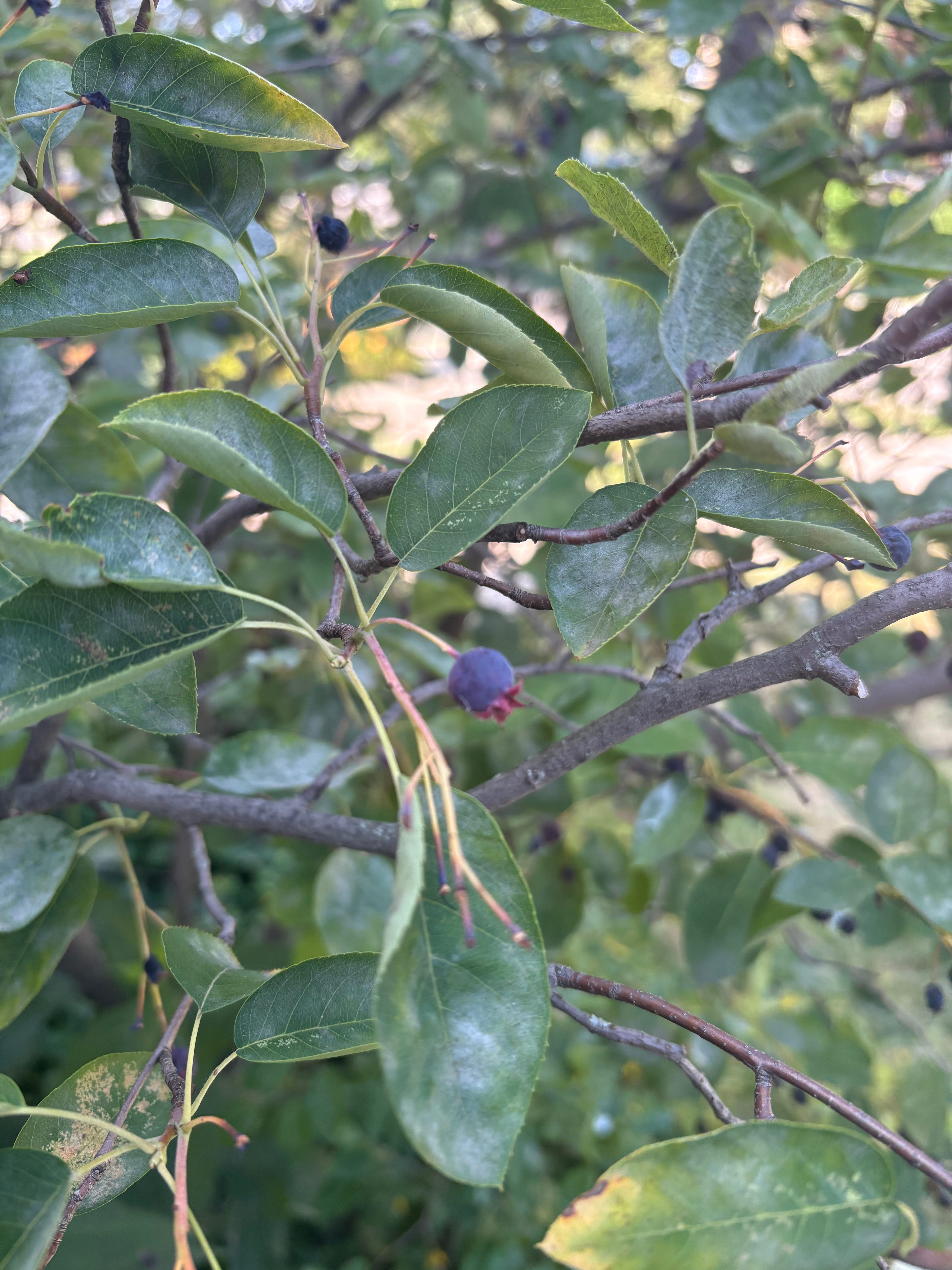
Serviceberries, accordingly to Kimmerer are the perfect example of a gift economy. You don’t buy them in stores; instead, they’re shared among neighbors, and no money is exchanged.
*I’ve been listening to audiobooks lately when I’m working alone in the kitchen and it makes me so happy! Please leave a comment if you have a recommendation, particularly if the narrator is compelling.
Earlier today I stopped at Fisheye Farms in Core City to pick up some salad greens. Andy gave me a quick tour of the land, including their goumi berry (!) tree. The tree—native to Korea, China, and Japan— is filled with bright red, oblong fruits that look like a cross between strawberries and grapes and taste like a cherry Starburst candy. Juicy and ripe! Andy explained that they have no intention of selling the berries; they’re there for you, for me, for anyone to enjoy. What a deeply synchronous moment, what a feeling of gratitude.
And now, shortcakes!